
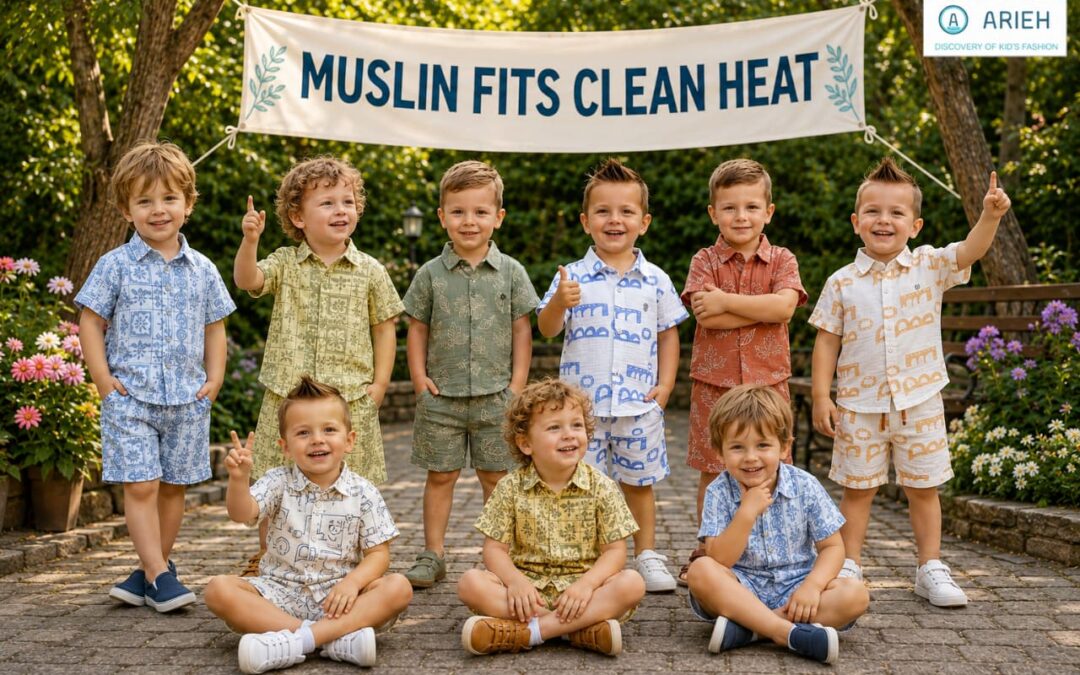
If you have ever peeled a sweaty cotton shirt off a cranky toddler in the middle of an Indian summer afternoon, you already know why fabric choice matters more than fashion. Muslin clothes for boys have quietly become the thing parents reach for first between April and September, and Arieh’s new co-ord collection is a good example of why. It is woven, not just marketed, to handle heat, sweat, and constant movement without turning into a damp, clingy mess by lunchtime. Whether it is a weekend at the park in Chennai or a birthday party in Delhi during peak summer, the difference shows up within the first hour of wear.
Contents
- 1 What Makes Muslin Different From Regular Cotton
- 2 Why Muslin Clothes for Boys Are Perfect for Indian Summer Heat
- 3 Inside the Arieh Muslin Collection
- 4 How to Style Muslin Co-ord Sets for Everyday Wear
- 5 Muslin vs Regular Cotton: A Quick Comparison
- 6 Caring for Muslin Clothes: Washing and Storage Tips
- 7 Sizing and Fit Guide for Toddlers and Kids
- 8 Why Parents Are Choosing Favourite Shop’s Arieh Collection
- 9 Frequently Asked Questions
- 10 The Takeaway
What Makes Muslin Different From Regular Cotton
Muslin is not a separate fibre from cotton, it is a way of weaving it. Instead of the tight, dense weave used in a typical cotton shirt, muslin uses a loose, open weave, sometimes doubled into two or three layers for extra softness. That open structure is what gives it a slightly crinkled, lived-in texture even when it is brand new, and it is also what lets air pass straight through the fabric instead of getting trapped against the skin.
The result is a fabric that feels lighter than it looks. A muslin shirt and a regular cotton shirt can weigh almost the same on a scale, but on a moving, sweating child, the muslin one breathes so much better that it feels like a different category of clothing altogether.
Why Muslin Clothes for Boys Are Perfect for Indian Summer Heat
Boys, especially toddlers and preschoolers, do not sit still long enough for heavy or restrictive fabric to be comfortable. They run, climb, nap, and sweat through all of it. This is exactly the situation muslin clothes for boys were built for, and it is worth breaking down why in a little more detail.
Breathability and Temperature Regulation
A child’s body is not as efficient at regulating temperature as an adult’s. Overheating happens faster, and it happens quietly, long before a child complains about being hot. Loose-weave muslin lets heat escape from the skin instead of trapping it, so a boy playing outside in 38 degree heat stays noticeably cooler in a muslin set than in a tightly woven synthetic blend. It is one of the simplest ways to reduce the risk of heat rash and general crankiness on a hot day.
Gentle on Sensitive Skin
The other half of the story is texture. Muslin softens with every wash instead of wearing thin and rough, which matters for boys who tend to rub against their clothes far more than they realise. There is less friction against the neck, underarms, and inner elbows, which are exactly the spots where heat rash and chafing usually start. For a child with eczema-prone or generally reactive skin, that reduced friction can make the difference between a set of clothes worn happily all day and one that gets tugged at and complained about within the hour.
Inside the Arieh Muslin Collection
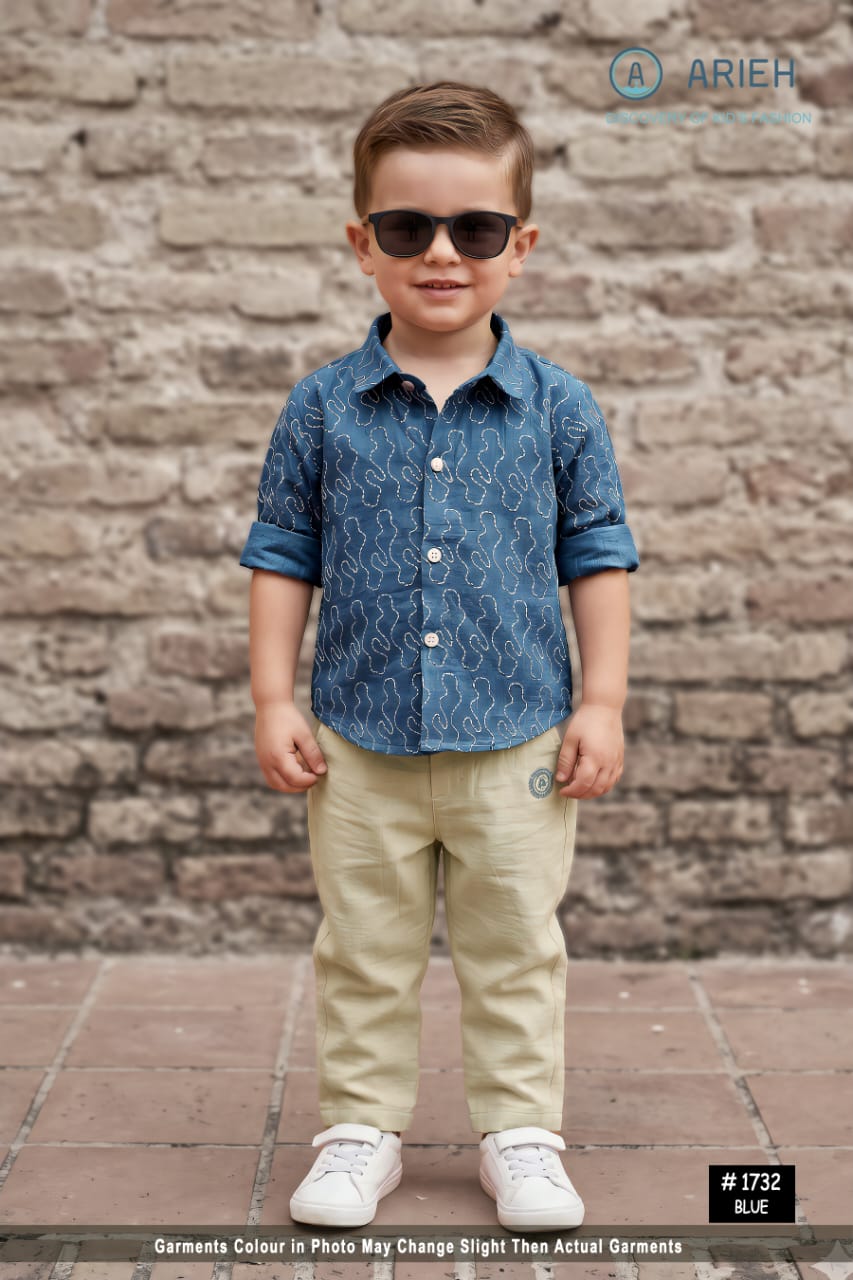
Arieh, Favourite Shop’s kids fashion label, built this collection specifically around that idea of clean, breathable comfort. The co-ord sets pair a relaxed, collared shirt with matching shorts, cut with roll-up sleeves and a bit of extra room through the body so the fabric can actually do its job instead of sitting flat against the skin. Every piece uses the double-layer muslin weave rather than a single thin layer, which adds just enough structure that the shirts still look neat for a family outing, school event, or evening walk, not just loungewear.
Fabric, Fit and Everyday Comfort
The shirts sit with a slightly boxy, relaxed fit through the shoulders and taper gently at the waist, so they layer well over the matching shorts without bunching up. Buttons are set with enough spacing that a boy can manage them himself by age four or five, which sounds minor until you are the parent handling a wriggling child at 7am. The shorts use a soft elastic waistband with a working drawstring, so sizing has a bit of natural give between wears and washes.
Colours and Prints in the Collection
The range leans into muted, wearable tones, sage green, powder blue, soft mustard, warm rust, and off-white, most of them finished with small tonal prints rather than loud graphics. That makes individual pieces easy to mix across the set or with plain shorts and trousers already in a child’s wardrobe, so one Arieh shirt does not have to stay locked to its original matching shorts to get worn often.
Double-Layer Weave and Fabric Weight
Not all muslin is equal, and weight is usually where quality shows up first. A very thin, single-layer weave feels airy but tends to go sheer and lose shape quickly, while an overly dense one starts to defeat the point of choosing muslin at all. Arieh’s shirts use a double-layer construction, two layers of the open weave stitched together, which keeps the fabric opaque and structured enough for daily wear while still letting air move through both layers. It is a small manufacturing detail, but it is the difference between a set that still looks sharp after twenty washes and one that starts to sag by the fifth.
How to Style Muslin Co-ord Sets for Everyday Wear
The shirt-and-shorts combination works as a full set for anything from a family lunch to a birthday party, but it is just as useful broken apart. The shirt alone, sleeves rolled, works over plain cotton shorts for a regular school pickup or park visit. For cooler evenings, the same shirt layers cleanly under a lightweight jacket without feeling bulky, since muslin folds flat instead of puffing up.
White canvas shoes or simple sandals keep the look practical rather than fussy, which matters for a fabric that is meant to be lived in, not just photographed. If a child is prone to rashes in hot weather, pairing the shirt with breathable cotton shorts underneath rather than synthetic ones keeps that same logic consistent from top to bottom.
Muslin vs Regular Cotton: A Quick Comparison
Parents often ask whether muslin is simply a marketing term for cotton, so here is the practical difference side by side.
- Airflow: Muslin’s open weave allows far more airflow than standard cotton, which is tightly woven for durability rather than ventilation.
- Feel over time: Muslin gets softer with every wash. Regular cotton tends to stay the same or gradually stiffen depending on the weave.
- Weight: Muslin feels lighter on the body even at a similar fabric weight, because the loose weave drapes rather than clings.
- Best use: Muslin suits hot, humid climates and sensitive skin. Regular cotton is a reasonable all-rounder but does not manage extreme heat as well.
Caring for Muslin Clothes: Washing and Storage Tips
Muslin is genuinely low maintenance, which is part of the appeal for a busy household. Wash in cool or lukewarm water on a gentle cycle, and skip the fabric softener, since it coats the weave and blunts the breathability that makes muslin worth buying in the first place. Line drying keeps the texture intact for longer than a tumble dryer, though a low heat setting is fine if you are in a hurry.
Because muslin creases easily by design, a light iron on a warm, not hot, setting brings a shirt back to shape for occasions, while everyday wear looks perfectly fine with its natural, slightly crinkled texture left alone. Fold rather than hang for storage between seasons, since the loose weave can stretch out of shape on a hanger over time.
Sizing and Fit Guide for Toddlers and Kids
Getting the size right matters more with a relaxed-fit fabric like muslin than with stretch knits, since there is less give to compensate for a size that is genuinely too small.
How to Measure Your Child at Home
Two measurements cover most of it: chest, measured under the arms at the widest point, and height, measured without shoes against a wall. Compare both to the size chart rather than picking based on age alone, since a two-year-old’s chest and height vary a lot from child to child.
Chest and Height Chart Basics
As a general rule, if a child’s chest measurement and height fall into two different size bands, size up rather than down. A slightly loose muslin set still looks and fits fine, and it also allows the airflow the fabric is designed for, while a tight one defeats the purpose entirely.
A Quick Note on Room to Grow
Muslin does not stretch the way knit fabric does, so leave a little room rather than buying for an exact current fit. It is a fabric that is meant to move with the child, not hug the body.
Why Parents Are Choosing Favourite Shop’s Arieh Collection
What keeps parents coming back for muslin clothes for boys from Favourite Shop is fairly simple: the fabric holds up to how boys actually spend their day, not just how they look standing still for a photo. Reviews and repeat orders on the site consistently mention two things, that the sets stay cool through long, hot afternoons, and that they soften rather than wear out after repeated washing.
If you are also shopping for something more festive alongside these everyday sets, our muslin co-ord sets made for Raksha Bandhan gifting use the same fabric logic in a dressier cut. And if fabric choice for sensitive skin is a bigger concern generally, not just for summer, our full guide to baby-safe fabrics goes deeper into what to look for beyond muslin as well.
The reasoning behind all of it lines up with wider pediatric guidance too. Lightweight, breathable clothing is a consistent recommendation in pediatric guidance on dressing babies and young children appropriately for heat, precisely because young children overheat faster and less obviously than adults do.
Frequently Asked Questions
Is muslin fabric safe for a toddler’s sensitive skin?
Yes. Muslin’s soft, breathable weave causes less friction against the skin than tighter cotton weaves or synthetic blends, which makes it a common recommendation for children prone to rashes or general skin sensitivity.
How many times can muslin clothes be washed before they wear out?
Muslin is designed to improve with washing rather than degrade quickly. With a gentle cool wash and air drying, a well-made muslin set can comfortably handle a full season of regular wear and washing without losing its softness or shape.
Do muslin clothes for boys shrink after washing?
Minimal shrinkage is normal after the first one or two washes, similar to most 100% cotton garments, which is why sizing slightly up is a sensible default rather than buying an exact current fit.
Is muslin only useful in summer?
It is most valuable in hot, humid weather, but the same softness and breathability make it comfortable year-round as a base layer, particularly for children with sensitive skin who benefit from gentler fabric regardless of season.
Can boys wear muslin co-ord sets to school or is it just for casual days?
It depends on the school’s dress code, but for non-uniform days, sports days, and after-school hours, muslin co-ord sets hold up well to a full day of activity without wilting the way a stiffer fabric would. Many parents keep one set specifically for the ride home after school, since it stays comfortable even after hours in a hot classroom or a sweaty playground.
The Takeaway
Muslin clothes for boys solve a problem most parents have lived through without necessarily naming it, the gap between clothes that look good and clothes that actually survive a hot, active day. Arieh’s co-ord collection at Favourite Shop is built around closing that gap, with a fabric that gets more comfortable the more it is worn, not less.
The blog you have posted for Arieh brand is very nice and your store collection is also awesome as always.