
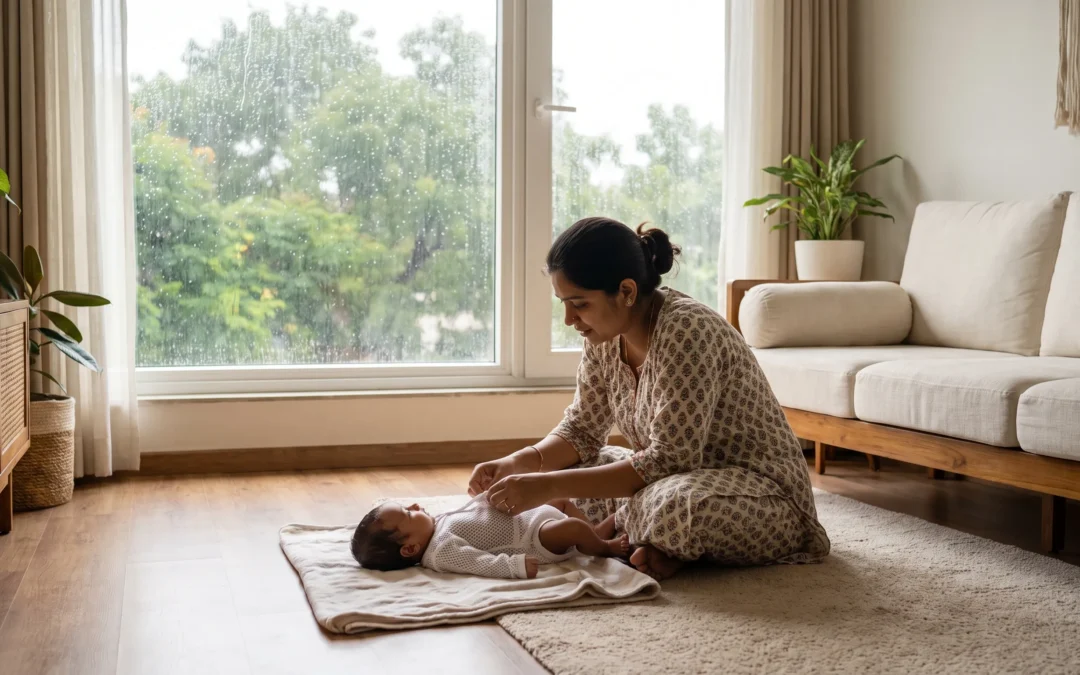
Chennai’s monsoon doesn’t arrive quietly. It comes in with the northeast winds sometime in October, sits through November, and lingers into December — long after the rest of India has dried out and packed its umbrellas away. If you’re dressing a baby through it for the first time, the advice written for Delhi’s July showers or Mumbai’s June downpours won’t quite fit. The humidity is different, the timing is different, and a newborn’s skin doesn’t care which monsoon it is — it just needs to stay dry, cool, and comfortable.
We’ve been dressing Chennai’s babies for over 35 years, through every one of these monsoons, and the questions parents bring us this time of year are almost always the same: what fabric actually works, how many outfits do I really need, and how do I stop my baby getting a rash when everything feels damp. This guide answers all three, plainly and practically.
Contents
- 1 Table of contents
- 2 Why Chennai’s monsoon needs its own approach
- 3 The fabric that matters most: why muslin works in monsoon
- 4 Building a monsoon wardrobe: a practical checklist
- 5 Everyday care: washing, drying, and storing monsoon clothes
- 6 Keeping skin safe: heat rash, diaper rash, and monsoon illness
- 7 A simple daily routine for monsoon mornings
- 8 Frequently asked questions
- 8.1 Is muslin actually warm enough for monsoon, or only for summer?
- 8.2 How many times a day should I change my baby’s clothes in monsoon?
- 8.3 Can I line-dry baby clothes during monsoon?
- 8.4 Are synthetic raincoats safe to wear directly over a baby’s clothes?
- 8.5 Does Favourite Shop’s muslin work for Chennai’s climate specifically?
- 8.6 When should I start monsoon-proofing my baby’s wardrobe in Chennai?
- 9 A season worth being prepared for
Table of contents
- Why Chennai’s monsoon needs its own approach
- The fabric that matters most: why muslin works in monsoon
- Building a monsoon wardrobe: a practical checklist
- Everyday care: washing, drying, and storing monsoon clothes
- Keeping skin safe: heat rash, diaper rash, and monsoon illness
- A simple daily routine for monsoon mornings
- Frequently asked questions
- A season worth being prepared for
Why Chennai’s monsoon needs its own approach
Most monsoon baby-care guides are written for the June-to-September rains that sweep across northern and western India. Chennai runs on a different calendar. The northeast monsoon typically arrives in October and stays into December, bringing intense, short bursts of rain layered on top of Chennai’s existing humidity rather than replacing dry heat with wet coolness the way it does elsewhere.
That combination — heat that doesn’t fully break, paired with damp air that makes everything slower to dry — is exactly why fabric choice matters more here than the generic advice suggests. A baby in Chennai isn’t just avoiding rain. They’re managing sweat, humidity, and dampness all at once, often on the same afternoon.
The fabric that matters most: why muslin works in monsoon
Ask any parent who’s tried both, and they’ll tell you the difference isn’t subtle. Regular cotton, especially heavier weaves, holds onto moisture — it takes its time drying, and in between wears it can feel clammy against a baby’s skin. Synthetic blends dry faster but trap heat and don’t let skin breathe, which is the last thing you want during a Chennai afternoon in October.
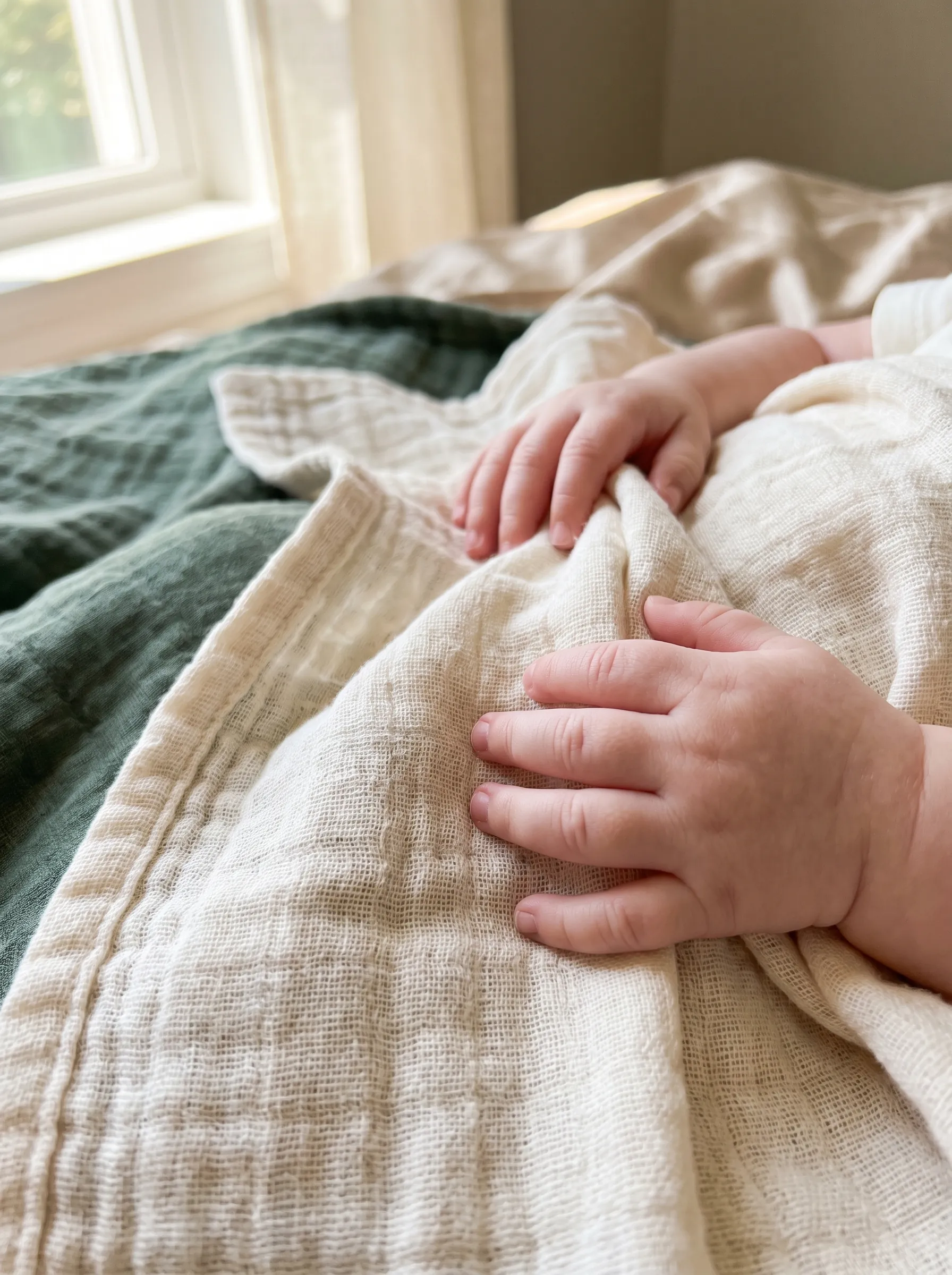
Muslin sits in a different category entirely. Its open, gauze-like weave is built to let air move through the fabric rather than sit on top of it. That’s the same quality that makes it work for swaddling a newborn in April heat — and it’s exactly what makes it useful again when the rains set in and the air turns heavy. It dries quickly after a wash, doesn’t stay damp against the skin the way a thicker cotton can, and softens further with every wash rather than wearing out. If you’re deciding between fabrics more broadly, our parents’ guide to fabrics for newborn skin goes deeper into how muslin compares across seasons, not just monsoon.
Muslin vs. cotton vs. synthetic — a quick comparison
| Fabric | Breathability | Dry time | Skin feel in humidity | Best for |
|---|---|---|---|---|
| Muslin (organic, open-weave) | Excellent — open weave allows constant airflow | Fast | Soft, never clammy | Swaddles, bodysuits, layering pieces |
| Regular cotton | Good, but denser weaves trap some heat | Moderate to slow | Can feel damp between washes | Everyday wear in milder weather |
| Synthetic blends | Poor — traps heat and moisture | Fast | Can irritate sensitive skin | Best avoided for daily monsoon wear |
Building a monsoon wardrobe: a practical checklist
You don’t need to overhaul your baby’s entire wardrobe for the season — you need the right handful of pieces, in enough quantity that damp weather never leaves you short.
The essentials
Start with lightweight muslin bodysuits as the base layer for almost every day. Add one or two full-sleeve rompers for cooler, rainy mornings, and a light muslin layering piece — a wrap or a jacket — for the in-between hours when the rain has cooled things down but the humidity hasn’t lifted. Keep a hooded rain cover or poncho by the door for any outing, however short. And because monsoon days mean more outfit changes than usual, keep more spares in rotation than you think you’ll need.
How much is enough
| Age | Bodysuits/rompers | Layering pieces | Muslin wraps/swaddles |
|---|---|---|---|
| Newborn (0–3 months) | 6–8 | 2 | 3–4 |
| Infant (3–12 months) | 5–6 | 2 | 2 |
| Toddler (1–3 years) | 4–5 sets | 1–2 | 1 (as a cover-up or nap blanket) |
The extra quantity isn’t about excess — it’s about never being caught with everything in the wash on a day when nothing dries by evening.
Everyday care: washing, drying, and storing monsoon clothes
Monsoon is the one season where laundry care matters as much as fabric choice. Damp clothes left too long — even slightly damp — are an invitation for a musty smell and, eventually, mildew. Wash in small batches so nothing sits in a damp pile waiting its turn, and dry indoors near a fan or in short spells of direct sun whenever the rain allows, rather than leaving clothes on an outdoor line overnight.
If a garment still feels the faintest bit damp before you put it away, a quick pass with a warm iron finishes the drying and deals with the germs that thrive in humid air — a small habit that matters more in October and November than any other time of year. Store only fully dry clothes, and keep a few freshly laundered spares in the diaper bag at all times; monsoon days rarely go as planned, and a spare outfit at hand saves more outings than it ruins.
Keeping skin safe: heat rash, diaper rash, and monsoon illness
A newborn’s immune system and skin barrier are both still developing, and monsoon humidity puts real pressure on both. The single most useful habit is frequency — checking and changing diapers more often than you would in drier months, since damp conditions make rashes appear faster and worsen quicker. Bathe your baby every two to three days with a mild, fragrance-free cleanser to clear sweat and bacteria without stripping the skin’s natural moisture.
Loose-fitting muslin does real, practical work here: it lets air reach the skin instead of trapping sweat against it, which is often the difference between a rash that never starts and one that needs a doctor’s visit.
Quick reference: what to watch for
| What you notice | Likely cause | What to do |
|---|---|---|
| Small red bumps on neck, chest, or back | Heat rash from trapped sweat | Switch to a looser muslin layer, keep skin dry, avoid synthetic fabrics |
| Redness in the diaper area | Prolonged dampness or delayed changes | Increase change frequency, use a gentle barrier cream, let skin air-dry briefly at each change |
| Persistent cold-like symptoms | Seasonal illness from humidity and temperature swings | Keep baby dry after any rain exposure, dress in breathable layers rather than heavy ones, consult your pediatrician if symptoms persist |
A simple daily routine for monsoon mornings
Most parents find the season easier once it becomes a routine rather than a daily decision. Check the sky and the humidity, not just the temperature. Start with a breathable muslin base layer every day, without exception. Add a layering piece only if the morning feels genuinely cool after rain — not by default. Keep the rain cover by the door, permanently, so it’s never the thing you forgot. And lay out the next day’s spare outfit the night before, so a damp morning never turns into a scramble.
Frequently asked questions
Is muslin actually warm enough for monsoon, or only for summer?
Muslin isn’t about warmth — it’s about airflow and quick drying, both of which matter just as much in monsoon as in peak summer. Layer a muslin wrap over a bodysuit on cooler, rainy mornings, and you get warmth without trapping moisture against the skin.
How many times a day should I change my baby’s clothes in monsoon?
There’s no fixed number — change whenever an outfit feels damp from sweat, drool, or a diaper leak, which in humid weather can mean three or four changes on an ordinary day. Keeping enough spares on hand makes this easy rather than stressful.
Can I line-dry baby clothes during monsoon?
Outdoor line-drying works on the rare dry, sunny break in the weather, but on most monsoon days you’re better off drying indoors near a fan or with a quick iron pass to finish the job — leaving clothes damp for hours invites mildew and odor.
Are synthetic raincoats safe to wear directly over a baby’s clothes?
Yes, for short outings — a hooded poncho or raincoat over breathable clothing is the safest combination. The key is not to let a baby sit in a fully waterproof layer for extended periods indoors, since it will trap heat and sweat.
Does Favourite Shop’s muslin work for Chennai’s climate specifically?
It’s actually why we source it the way we do. Our imported South Korean organic muslin was chosen for exactly this combination of heat and humidity — the same weave that keeps a newborn cool through Chennai’s summer is what keeps them comfortable through the monsoon months too.
When should I start monsoon-proofing my baby’s wardrobe in Chennai?
Since Chennai’s monsoon runs October through December, late September is the right time to check your baby’s wardrobe, wash and air out any stored muslin pieces, and pick up a few extra layering pieces before the rains actually begin.
A season worth being prepared for
Chennai’s monsoon rewards a little preparation more than most seasons do — the right fabric, a few extra spares, and a routine that doesn’t require reinventing itself every morning. It’s the same principle we’ve built Favourite Shop around for three generations: dress a child in what actually works for them, not what’s simply on trend.
If you’d like help putting together a monsoon-ready wardrobe for your little one, visit us in Sowcarpet or browse our muslin essentials online — we’re always happy to talk through what will genuinely suit your baby’s season.