
It is easy to pick a dress for a toddler based on the print alone, a certain shade of pink, a pattern with strawberries on it, whatever catches her eye in the moment. But the print is the last thing that decides whether she will actually want to keep wearing it by the afternoon. Cotton dresses for baby girls hold up in a way synthetic blends simply do not, and Orrigany’s new collection is a good case study in why that distinction is worth paying attention to. A dress that survives nap time, snack time, and an unplanned trip through a mud puddle earns its place in the wardrobe far more than one that only survives a photograph.
Contents
- 1 What to Look for in Cotton Dresses for Baby Girls
- 2 Why Fabric Matters More Than the Print
- 3 Inside the Orrigany Dress Collection
- 4 How to Style These Dresses for Different Occasions
- 5 Building a Small, Versatile Wardrobe
- 6 Cotton vs Synthetic Blends: What’s the Real Difference
- 7 Washing and Care Tips for Printed Cotton Dresses
- 8 Sizing Guide for Toddler Dresses
- 9 Why Parents Choose Orrigany at Favourite Shop
- 10 Frequently Asked Questions
- 10.1 Are cotton dresses for baby girls better than blended fabrics?
- 10.2 Will the print fade after a few washes?
- 10.3 Is a 12/18 months size right for a 1-year-old?
- 10.4 Can these dresses be worn in cooler weather, not just summer?
- 10.5 How do I stop the skirt riding up when she is climbing or sitting on the floor?
- 11 The Takeaway
What to Look for in Cotton Dresses for Baby Girls
Not every dress labelled cotton is cut the same way. The details that actually matter for a toddler are soft interior seams, elastic that gives rather than digs in, sleeves that do not restrict arm movement, and a skirt with enough gather to allow sitting, climbing, and running without pulling at the waist. A dress can be 100% cotton and still be uncomfortable if the construction ignores how small children actually move through a day.
It is worth checking the label for the fabric composition rather than trusting the product photo alone, since a cotton-look print can sometimes hide a polyester blend underneath. A quick way to check in person is the crease test, genuine cotton wrinkles easily and softens with a light scrunch, while polyester tends to spring back and feel slightly slick to the touch.
Why Fabric Matters More Than the Print
Parents often shop by print first and fabric second, which is understandable, prints are what catch the eye in a photo. But fabric is what decides whether a dress gets worn again next week or ends up pushed to the back of the drawer.
Breathability and Comfort for All-Day Wear
Cotton allows air to move against the skin instead of trapping heat, which matters enormously for a toddler who does not sit still. A child running around at a birthday party or playing in the garden generates real heat, and synthetic blends tend to hold onto both that heat and the resulting sweat. Cotton dresses for baby girls stay noticeably more comfortable through a full afternoon of activity for exactly this reason.
Gentle on Sensitive and Eczema-Prone Skin
Soft, breathable cotton causes far less friction against the skin than rougher synthetic weaves, which is a genuine consideration for toddlers with eczema or general skin sensitivity. Rough seams and synthetic fibres are a common trigger for irritation in young children, and swapping to well-made cotton pieces is often one of the simplest changes a parent can make.
Inside the Orrigany Dress Collection
Orrigany, Favourite Shop’s dress label for baby girls, builds its collection around a single well-tested silhouette across several prints, rather than chasing a new cut every season. That consistency means parents who find a fit that works can reorder in a new print with confidence instead of guessing again from scratch.
Prints and Colours
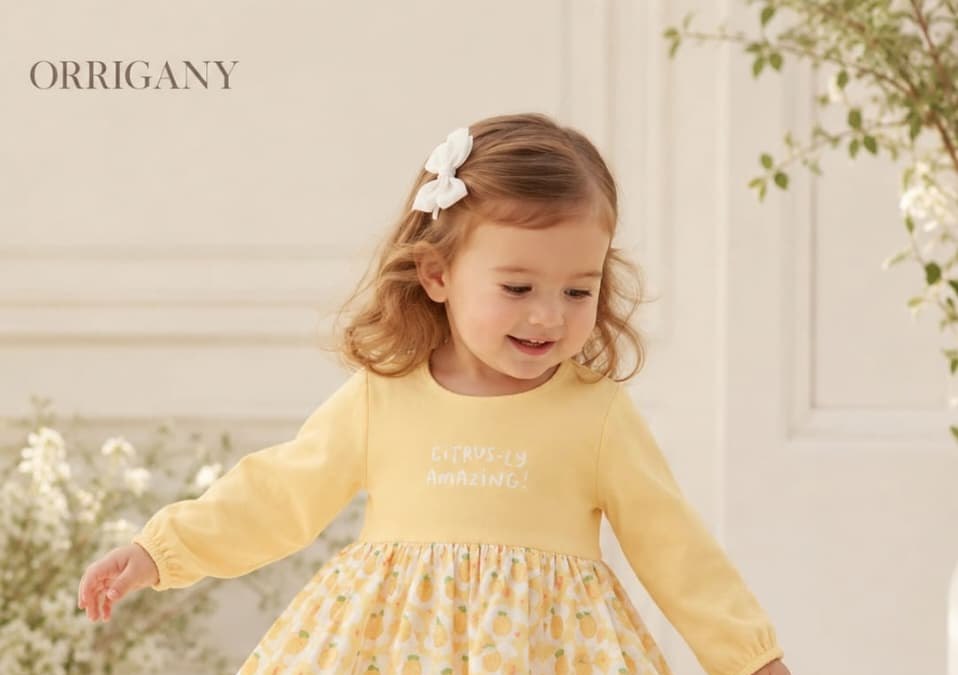
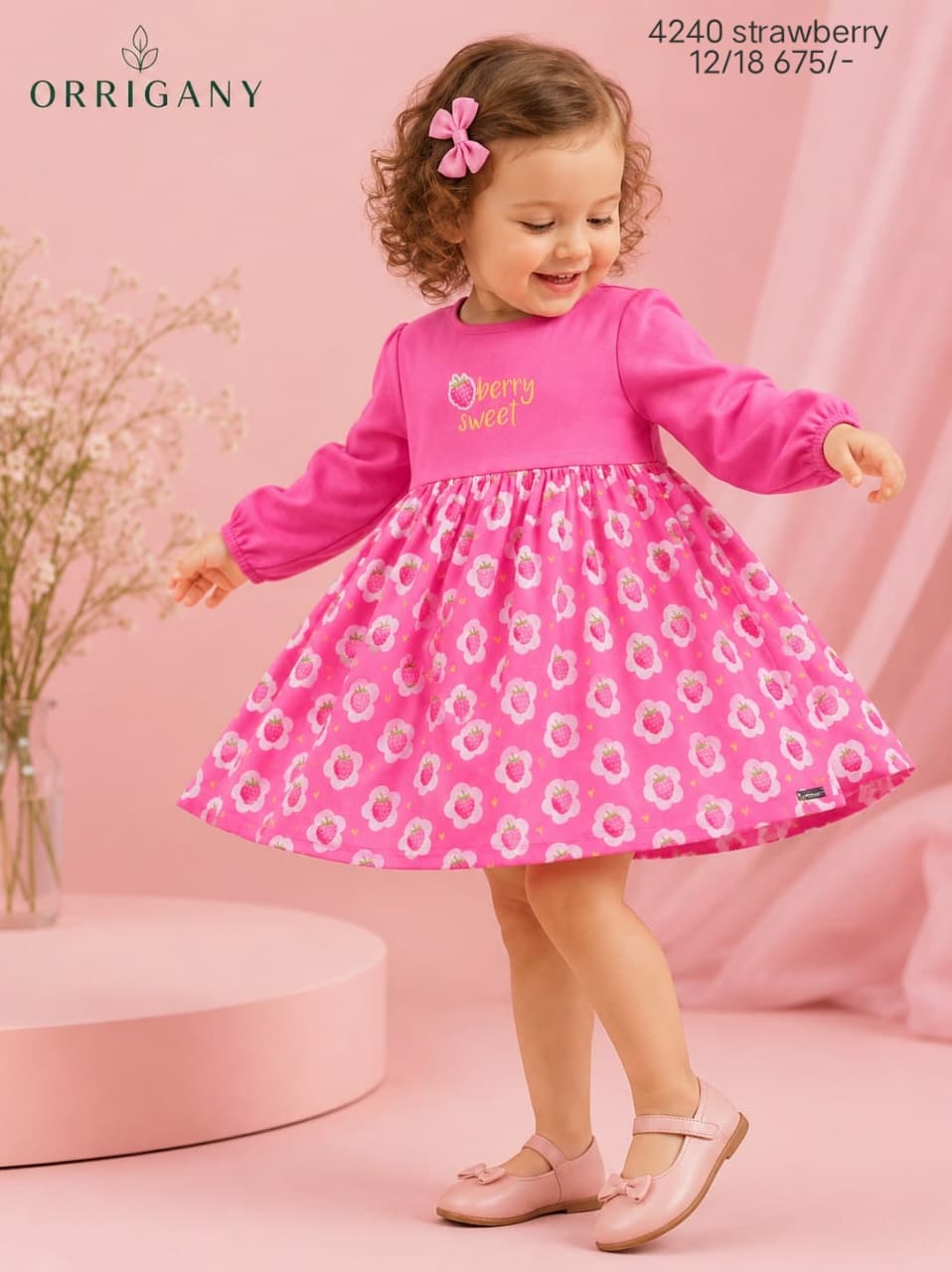
The current range spans four prints, a soft yellow pineapple print reading “Citrus-ly Amazing,” a green kiwi print with a “Cool Days” bodice, a denim-blue floral and rainbow print reading “Choose Happy,” and a bright pink strawberry print reading “Berry Sweet.” Each pairs a solid knit bodice with a busier printed skirt, which keeps the overall look playful without becoming visually overwhelming on a small frame.
Fit and Everyday Practicality
Long, elasticated cuffs keep sleeves from riding up during play, and the gathered skirt sits high enough at the waist to allow free movement while sitting cross-legged or being lifted in and out of a car seat. It is a dress built to survive an actual toddler’s day, not just a photograph.
Where Cotton Quality Actually Shows Up
Two dresses can both say “100% cotton” on the label and still feel completely different after a month of wear. Thread quality and weave density decide most of that difference. A thin, loosely knit bodice pills and thins out quickly, while a denser knit holds its shape wash after wash. Orrigany’s bodices use a medium-weight cotton knit specifically because it strikes that balance, soft enough not to irritate, dense enough to still look new after repeated laundering. The printed skirts follow the same logic, a plain-weave cotton with enough body to hold the gather and drape properly instead of clinging or creasing into a wrinkled mess by the end of the day.
How to Style These Dresses for Different Occasions
On their own, these dresses work well for everyday wear, playdates, and casual family outings. For something dressier, a pair of simple white shoes and a matching hair bow, as seen across the collection, is usually all it needs. In cooler months, the same dress layers cleanly over a long-sleeve bodysuit or under a light cardigan without losing its shape, which stretches its use well past a single season.
For a family event or a festival visit, plain white tights and mary-jane shoes dress the same outfit up considerably without adding anything uncomfortable underneath. Keeping accessories minimal, one hair clip, simple shoes, works especially well with prints this busy, since the dress itself is already doing most of the visual work.
Building a Small, Versatile Wardrobe
Because all four Orrigany prints share the same cut, they mix and match with existing basics more easily than a one-off statement dress would. A cardigan or denim jacket that works with one print in the collection tends to work with all of them, since the bodice colours, yellow, green, denim blue, and pink, are chosen to sit well against plain neutrals. That makes it realistic to build a small rotation of two or three dresses that cover most of a season, rather than accumulating pieces that only work with one specific outfit.
Cotton vs Synthetic Blends: What’s the Real Difference
It is a fair question, since synthetic blends are often cheaper and easier to care for on paper. Here is what actually separates them in daily use.
- Breathability: Cotton lets air circulate against the skin. Polyester and other synthetic blends trap heat and moisture instead.
- Skin feel: Cotton softens with washing. Synthetic blends often stay the same texture or develop a slight stiffness over time.
- Sensitivity: Cotton is the fabric most commonly recommended for children with eczema or reactive skin, since it causes less friction than synthetic fibres.
- Longevity of colour: Well-dyed cotton prints, like Orrigany’s, hold their colour through repeated washing rather than dulling quickly.
Washing and Care Tips for Printed Cotton Dresses
Wash printed cotton dresses in cool water on a gentle cycle, and turn them inside out first to protect the print from direct friction against other clothing in the wash. Skip the fabric softener, since it coats cotton fibres and reduces the breathability that makes the fabric worth choosing in the first place. Line dry out of direct, harsh sunlight to keep colours from fading, and iron on a cool setting only if needed, cotton knit bodices rarely need it for everyday wear.
Between wears, fold rather than hang printed cotton dresses where possible, since a hanger can pull the gathered skirt out of shape over weeks of storage. If a stain does turn up after a day of play, treating it while still slightly damp rather than letting it dry in gives cotton a much better chance of coming clean without needing anything harsher than a normal wash.
Sizing Guide for Toddler Dresses
Getting the size right matters more with a fitted bodice and gathered skirt than it does with a loose, oversized style, since there is less fabric to compensate for a size that runs small.
How to Measure Your Toddler at Home
Chest measurement, taken under the arms at the widest point, and height, measured without shoes, are the two numbers that matter most. Compare both against the size chart rather than guessing from age alone, since toddlers of the same age can vary widely in both.
Reading the Size Chart Correctly
Sizes like 12/18 months refer to a range, not an exact age, and it is common for a child to sit at either end of that range depending on build. When in doubt between two sizes, sizing up gives more comfortable movement without the dress looking obviously oversized.
A Note on Growth Room
Cotton knit bodices have a small amount of natural stretch, but the woven printed skirts do not, so leave a little room through the body rather than buying for an exact current measurement.
Why Parents Choose Orrigany at Favourite Shop
The recurring theme in repeat orders is simple, the dresses keep their shape and colour after regular washing, and toddlers stay comfortable in them long enough to actually enjoy wearing them, not just look good in a first photo. Alongside the four dress prints, the same soft-cotton approach carries over into Orrigany’s denim dungaree, so parents who want to mix dresses with easier everyday pieces are not choosing between comfort and fabric quality depending on the item.
If fabric choice matters to you beyond dresses too, our full guide to baby-safe fabrics covers what to look for across a child’s wardrobe. And if you are shopping for a brother alongside her, our guide to muslin clothes for boys covers the same fabric-first thinking for warm-weather boyswear.
That fabric-first approach lines up with wider dermatological guidance as well. Soft, breathable cotton is consistently named as one of the better choices for children with sensitive or eczema-prone skin, precisely because it reduces the friction and heat buildup that trigger irritation.
Frequently Asked Questions
Are cotton dresses for baby girls better than blended fabrics?
For everyday comfort, generally yes. Cotton breathes better, causes less friction against the skin, and softens with wear, while blended fabrics tend to trap heat and stay the same texture over time.
Will the print fade after a few washes?
Well-dyed cotton, like Orrigany’s collection, holds its colour through normal washing as long as it is washed in cool water and dried out of direct harsh sunlight. Turning the dress inside out before washing helps protect the print further.
Is a 12/18 months size right for a 1-year-old?
It depends on the child’s individual build more than age alone. Checking chest and height against the size chart gives a more reliable fit than going by age, and sizing up is the safer choice when a child sits between two ranges.
Can these dresses be worn in cooler weather, not just summer?
Yes. Layered over a long-sleeve bodysuit or under a light cardigan, the same cotton dress works through cooler months as well, which makes it a reasonable purchase beyond a single season.
How do I stop the skirt riding up when she is climbing or sitting on the floor?
A well-gathered cotton skirt like Orrigany’s is cut with enough fullness that it falls back into place naturally, but pairing it with matching shorts or leggings underneath is a common, practical workaround for very active toddlers, and keeps things simple during the day without changing how the dress looks.
The Takeaway
Cotton dresses for baby girls are worth choosing for the fabric first and the print second, even though the print is usually what catches your eye initially. Orrigany’s collection at Favourite Shop is built on that same logic, comfortable enough that a toddler will actually want to keep wearing it, in prints that make her want to twirl.